
How to Build a High-Performance team: Productive Team
In a high-performance team management, not everyone will use all their strength to complete a goal or task. Then, for the managed team, whether the power of everyone in the team can be fully exerted, the means are very critical, including…
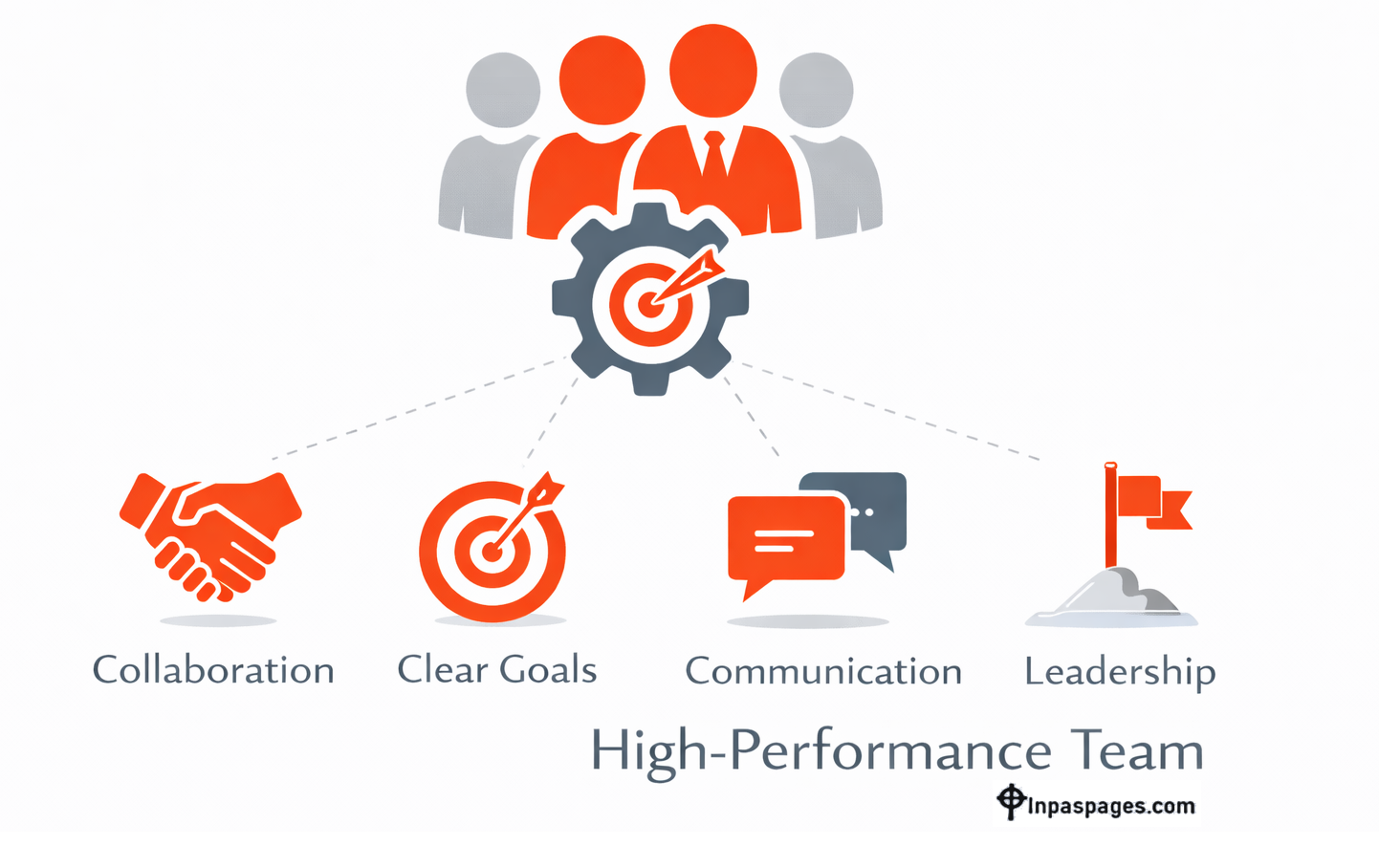
Our Expectations from a Team
For a long time, I have always had a sense of security and grounding in the concept of team. I always feel that what the team should give each member is an organization. That feels the same way as me, an umbrella to shelter from the wind and rain in the cold, and a big tree to shade and cool down in the heat.
But after many experiences and analyses, I found that many teams are not what we imagined.
Many times, we have made the word team and the organization that exists around us too powerful and have high expectations. So that the embarrassment and pursuit of team power in the corporate world has reached a divine step.
Teams Depend on Individual Quality
After all, the team is composed of individual people, and if the quality of each person cannot be improved. Then the team often cannot reach the height you expect, no matter how effective it is. As we know, if the average person can pull an object weighing 85 kilograms.
How many kilograms of something can be pulled for a team of 7 people? No doubt you will quickly answer that it should weigh 595 kilograms.
The reason is that you are using the principle of synergy: The whole is equal or larger than the sum of its individual parts, is that really the case? Actually, it’s not. In total, the seven people can pull objects weighing only 7 kilograms.
Why Incentives and Management Matter
That is to say, in a team, not everyone will use all their strength or strength to complete a project or task. Then, for the managed team, whether the power of everyone in the team can be fully exerted, the means are very critical, including incentives.
On the other hand, it also illustrates another problem, managing a team, if the team is as large as a conglomerate of tens of thousands of people, may be able to manage it well. But for a team organization of dozens of people, it may not be able to straighten it out.
Challenges in Managing Small Teams
A friend talked about his experience when he used to hold a senior position in a large company, managing hundreds of people. After giving full play to his management talents, his work performance and team efficiency can be improved to varying degrees.
But in order to fulfill one of his promises, he gave up this position with a superior income, pay and status to help out in a business he had promised to lead (and start his own business) before.
When he came alone to this friend, the leader and friend showed great gratitude for his arrival. Which also led him to a senior position in the company, equivalent to a marketing director, except that he managed only a team of dozens of people.
Real Experience of a Manager
Later, every time he saw me, he would complain to me that this small team was too tiring to manage, more cumbersome and complicated than the hundreds of people I had managed before.
The quality of the people in the team is very different, and the interpersonal relationship and personnel situation and the atmosphere in the team are very bad. Which is the most tiring place for him to manage the team.
The result is that the team’s performance is very unsatisfactory, and he can not explain to his leadership friends, nor convince the team members, and he personally feels very dissatisfied with many of his practices, and he is unable to forgive himself, so he feels very depressed.
Understanding Team Inertia
This is also often called “team inertia” in management, that is, when the efforts of individuals are combined with the efforts of others, they do not work so hard in isolation. When people are in a team, their work cannot be clearly distinguished, and it is not easy to evaluatem they tend to put in less effort.
If coupled with the team’s unhealthy atmosphere, uneven personnel quality, lack of necessary cohesion and reasonable incentive mechanism.
It is easy to lead to the team’s performance is not as good as individual performance. The team’s overall goal is not clear, loose state, so that the results of this process are self-evidently inefficient.
When Team Performance Becomes Inefficient
When encountering bottlenecks in team management, managers often doubt the methods and methods they have adopted in the past, and sometimes even some correct practices will have the illusion of managing the team.
As a result, the management of the team became more and more passive, and finally it almost reached the embarrassing situation of “learning from Handan and losing the original step with laughter”.
When it comes to team management, it’s crucial to introduce the right mechanisms and reasonable methods.
This reminds me of the “porridge sharing story” that many people are familiar with in management, which says:
Seven people used to live together, sharing a large bucket of porridge every day. Terrible thing, porridge is not enough every day.
In the beginning, they decided who would share the porridge, one a day. So at the end of the week, they only have one full day, which is the day they share the porridge.
The Importance of Management Systems
Later, they began to elect a person with high morality to share the porridge. Power will produce corruption, and everyone will begin to dig out their minds to curry favor with him, bribe him, and make the whole small group a miasma.
Then everyone began to form a three-member porridge committee and a four-member selection committee, attacking each other and tearing down, and the porridge was cold in their mouths.
Finally, come up with a method: take turns to divide the porridge, but the person who divides the porridge has to wait for everyone else to pick it and take the last bowl left.
In order not to let yourself eat the least, everyone tries to divide evenly, even if it is uneven, you can only admit it. Everyone is happy and harmonious, and the days go by, the better.
How Systems Shape Team Behavior
The same seven people, in the team with different distribution systems, will have different atmospheres. Therefore, if a team has bad work habits, it must be a problem of mechanism, it must not be completely fair, just, open, there is no strict reward and punishment for laziness.
How to formulate such a system, is a problem that every leader needs to consider. Each member of the team should clearly understand that the team relies on and collaborates to achieve a common goal, rather than selfishly damaging the team’s goals with personal goals, and taking the team’s goals as an important guarantee for building a high-performance sales team.
Setting Clear Team Goals
Discussing the management and performance of the team, the ultimate goal is to achieve the improvement of the overall performance of the team.
So where does the high-performing team come from? What factors should we consider, and what management methods and means should we use to successfully build high-performing teams and play their role?
Build unified values for your team
In order to exert the core strength of the team and build a high-efficiency team like a goose. It is necessary to establish a unified value in the team, that is, it is specifically condensed into the concept and team spirit in the team (the team here can be a small team or a large team like the enterprise). The realization is common value, common spirit, common emotional flow, and common destiny.
Let each member of the team clearly clarify the impact of these values on everyone, so as to give full play to the team members’ all-out saying that it is better to do than to do, to do the best. The second place means failure such a consensus concept, with the way you want others to treat themselves.
Be clear based on the goals in mind
The goals of high-performing teams are often “high goals”. It is not only responsible for the superior organization and leadership, but also sets an example for the subordinates.
Whether horizontal or vertical, the team’s goals will be noticeable. Others want to see if the goal of your high-performing team can live up to the name or waste.
At this time, for the management of the team and the creation of a high-performance team, it is necessary to establish a clear team goal and make continuous efforts based on this goal.
But when achieving team goals, don’t neglect individual performance goals and personal life goals in the team.
This is both a need to achieve the team’s goals and a manifestation of responsibility to every member of the team. However, this presupposes that individual goals must be subordinate to team goals.
Have the courage to deliver on your promises
High-performing teams are constantly committed to delivering on their promises. Not only the commitment of the team to the company, the commitment of the individual to the team.
The commitment of the company to the team and the individual, but also the commitment of the individual to himself. These commitments are mutual and cannot be separated casually.
If the commitment to the team to the individual is not fulfilled. Then the team’s performance cannot be improved and the members are not motivated. If the team’s promise to the business is not kept, the same high-performing team is just a fragile vase – it acts as a decoration.
If the individual promises to the individual in the team members cannot be kept. How can the team’s commitment be delivered?
These promises are all a link that must be experience in the process of achieving a high-performance team, either do not promise easily, or promise must be fulfill, even if the difficulty is great.
The acquired “charging” of knowledge and skills
No matter what type of team, if you want to become a high-performance team that can fight a tough battle and have excellent quality. In the final analysis, it is still necessary to “strike iron and be hard yourself”, constantly recharge and learn from yourself, and make up for the innate lack of knowledge and skills.
For the marketing team, it is not only necessary to have an in-depth understanding of the company’s products, competitor products and related product expertise. But also to train, learn and recharge. The knowledge and skills of visiting skills, sales skills, customer service skills, negotiation skills, communication skills, skills in handling customer complaints, writing skills, presentation skills, business transaction skills, marketing management skills and so on.
For today’s rapid economic and social development. The real ability and level of professional managers in a team is not measure by innate academic qualifications.
But in the acquired knowledge and skills of the acquired “charging”.
Active participation Deepen trust
A high-performance team requires every team member to show an active participation attitude. To every activity of the team and an obligation to communicate and share information among members. Only the continuous and effective sharing and transmission of the in-depth interaction, and information sharing and transmission. That such participation brings about can influence decision-making.
Recently, trust has also been further deepens. At least to show that you are working as a team for the benefit of yourself and others. Show that your talents are used openly and openly. You are a person who does what you say in the team.
This deepening of mutual trust among team members and active participation in activities and decision-making in the team will make the team accurate in setting goals, scientific and reasonable in decomposing tasks, and greatly improving efficiency when solving problems.
Boost team morale
The effectiveness of a team not only comes from the common values.
But more importantly, it requires team members to treat it with the right attitude. How to enable team members to achieve this kind of independent and efficient work goals. But also to strengthen the cohesion between the team. Motivate the morale of the team is one of the most effective means.
This allows team members to feel the high efficiency of the team. In addition to their good interpersonal relationships can spend effective time together. Spend energy to achieve the recognition and sharing and cherishing of results. But also make team members feel the external threat. Large-scale pressure from all sides will break the team at any time.
This vigilance must be guaranteed by high morale, and constantly motivating. The morale of this team with waves will make the potential of each member of the team exceed normal play. The high efficiency and high performance of the team are not difficult to achieve.