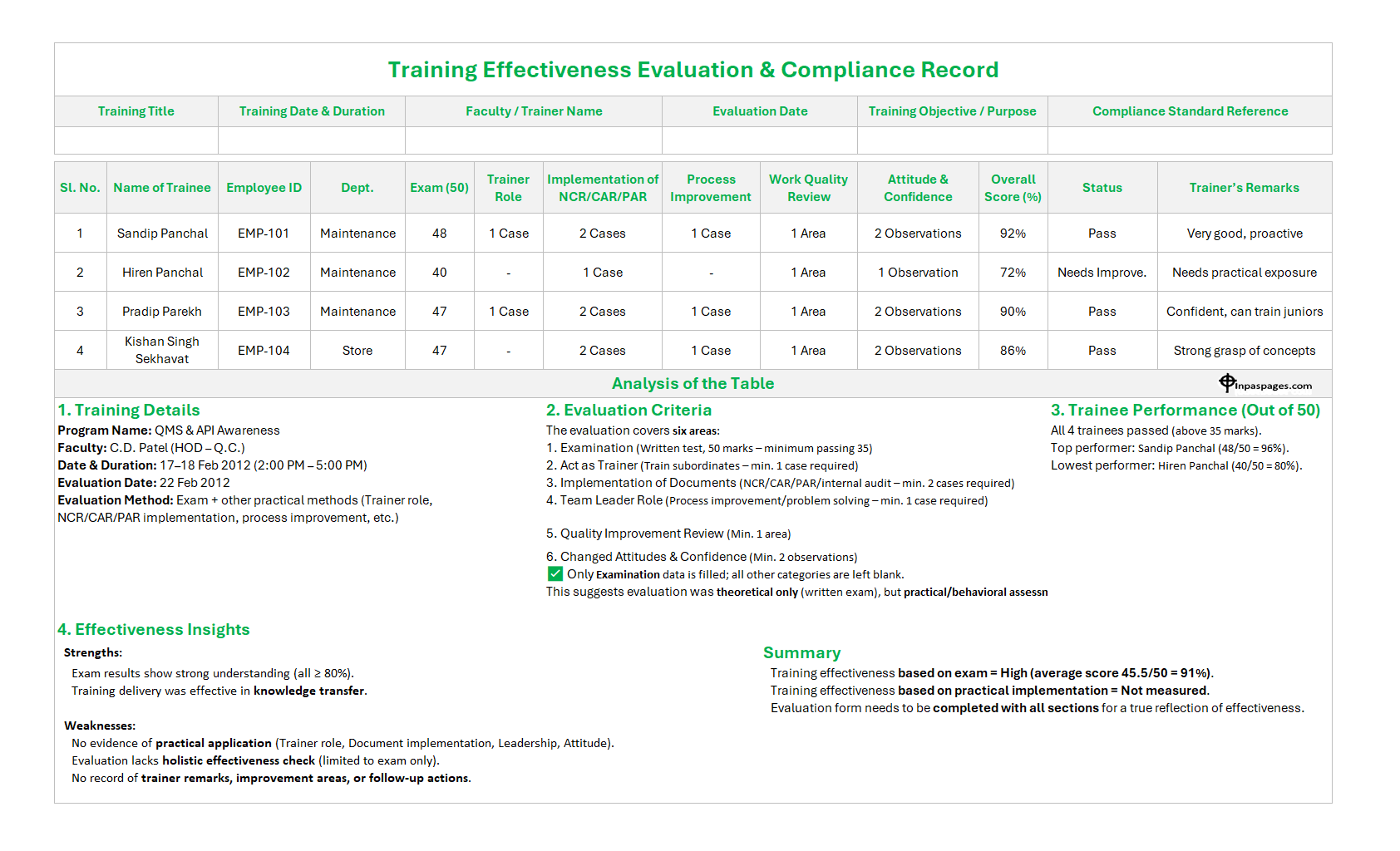
Training effectiveness evaluation
Training effectiveness evaluation is a process of checking whether a training program has successfully improved the knowledge, skills, behavior, and performance of employees. In fact, it is a systematic process that is useful for measuring how well a training program achieves its objectives. Any training is considered successful only when:
- The employee who participated in the training program has fully understood the training.
- After the employee completes the training, his skills should improve.
- The employee should be using the learning in his daily processes, activities and behavior according to the training received.
- And finally, after the completion of this training program, the employee and the organization should benefit.
When the training program is completed, it is very important to check how much each employee who participated in the training benefited or increased in knowledge, skills, behavior and results from the training.
Why is training effectiveness evaluation important?
Training effectiveness evaluation is very important especially in manufacturing units because it can be seen that performance, safety, quality and productivity are being improved at every level of the system. In which the following points are reinforced.
Improves safety
It is natural that large machines and equipment are used in manufacturing areas. In which special training is required for many processes. Training is not only for operating the machine or producing, but also how to complete the work keeping in mind safety. While training effectiveness evaluation ensures that workers are following safety procedures properly.
Ensures the use of skills on the shop floor
During the evaluation, the evaluation team ensures that the workers are performing the tasks for which they have received training during the training, during the actual work or not. Also, machine operation, quality inspection and SOP compliance are being implemented.
Reduces defects and rework
If workers are properly trained, and are performing their jobs accordingly, it is natural that product quality will improve. They can also identify gaps that cause errors, scrap or rework. As a result, the likelihood of defects and rework is reduced.
Increases productivity and efficiency
When do productivity and efficiency increase? When workers are effectively trained. And effective training evaluation ensures that training on good understanding of the process, reducing downtime and ease of operation is done properly and effectively.
Controls training costs
Training effectiveness evaluation not only ensures how effective the training is, it also focuses on what, to whom, and why the training actually needs to be given. So that it is easy for management to understand that all types of training are being provided to the right people at the right places. So that time and money are not wasted on production training. Evaluation links training to measurable results, which ensures a return on investment.
Supports continuous improvement
During the evaluation, the team pays attention to what works and what doesn’t. So that future training can be designed. Which helps in improving future training programs and aligning them with Lean, TPM and Six Sigma initiatives.
Builds employee confidence and accountability
It is very important for employees to gain confidence, and to be aware of their responsibilities. After training, employees feel more confident in their skills and are more accountable for their performance. Based on the visible results, it is easy to ascertain how effective the training is.
It is necessary that the training makes employees aware of the needs such as safe workplaces, good quality, high productivity and consistent performance. Therefore, the evaluation processes take its effectiveness seriously.
Training Effectiveness Evaluation Methods
When new workers are hired, or existing workers are assigned a new task. Then the need for training arises. And to ensure that this training is provided properly, training effectiveness evaluation is done. Which is possible in manufacturing organizations through simple, practical and task-oriented evaluation methods.
Pre-training and post-training evaluationIt is usually necessary to conduct evaluation twice, first when the need for training is felt, which can be understood from the evaluation that the needs such as when, to whom, why etc. can be identified. When after training, it compares the knowledge or skills of the employee before and after training.
| |
| How it works: (1) Before training, through short and simple tests. (2) Quizzes or practical work. (3) Same or similar evaluation after training.
| Production example: * Before quality training, check how many defects the operator can correctly identify. *After training, repeat the inspection and compare the results. |
On-the-job observationThis is part of the training evaluation process where supervisors or team leaders observe actual work behavior after training. Trained employees perform as trained, in accordance with SOPs, and effectively. | |
| What to observe: SOPs are followed, tasks are performed according to safety practices, correct machine operation, and quality of work should be checked. | Manufacturing Example: If employees have been trained for safety, after safety training, observe that operators consistently use PPE and follow lockout-tagout procedures. |
Skill Matrix AssessmentHere the HR team updates the competency levels of each employee on a sheet. And the effectiveness of the training is checked. | |
| How it helps: Helps track skill improvement. Identifies training gaps | Production Example: After machine operation training an associate move from “Basic” to “Independent Operator” level. |
Performance KPI MonitoringHere, the key performance indicators of the training process are to be monitored. Comparing the performance indicators before and after the training can help to understand how successful the process was. | |
| Key KPIs include: Defect rate, downtime, output per shift, accident frequency. | Manufacturing Example: If a maintenance team is trained for total productive maintenance. And after that, a reduction in the daily breakdown hours of machines and equipment is recorded, it shows the effectiveness of the training. |
Apart from this, there are many methods for evaluation. Comparing the performance of skills in simulated work and real work situations by employees, supervisors provide structured feedback on changes in employee behavior and performance.
Self-assessment by employees is also very important, so that their own confidence and understanding are assessed.