
The Dispatch performance analysis is actually review of the monthly effectiveness of sales to ensure that trends, and insights to identify gap of each customer order.
During the analysis we can review the information collecting from the sales department. Such as daily sales figures, customer details, and other product related information. This information is helpful to comparing planning of dispatch with actually we dispatched during the month. The gap of the dispatch data may help to management for identifying where we are doing mistake, or why remains part of the customer order is still pending.
The aim of this entire review is to identifying the gap or part of product which needs to be sale is still pending, or not dispatched yet. Means, management compare the data with planning and dispatch which actually complete during the month. During the analysis, we can get following information:
- As per planning, how much part of order is still pending for sales.
- What exactly reasons behind still part of order which is planned to dispatch is still pending.
- Possibility of the complete the order as per schedule.
- Finding for non-compliance of customer orders.
These are general identification that management can get from the reporting. Here is as below sample format of the planned vs actual dispatch data sheet, format is given for your reference:
Planned vs actual dispatch format
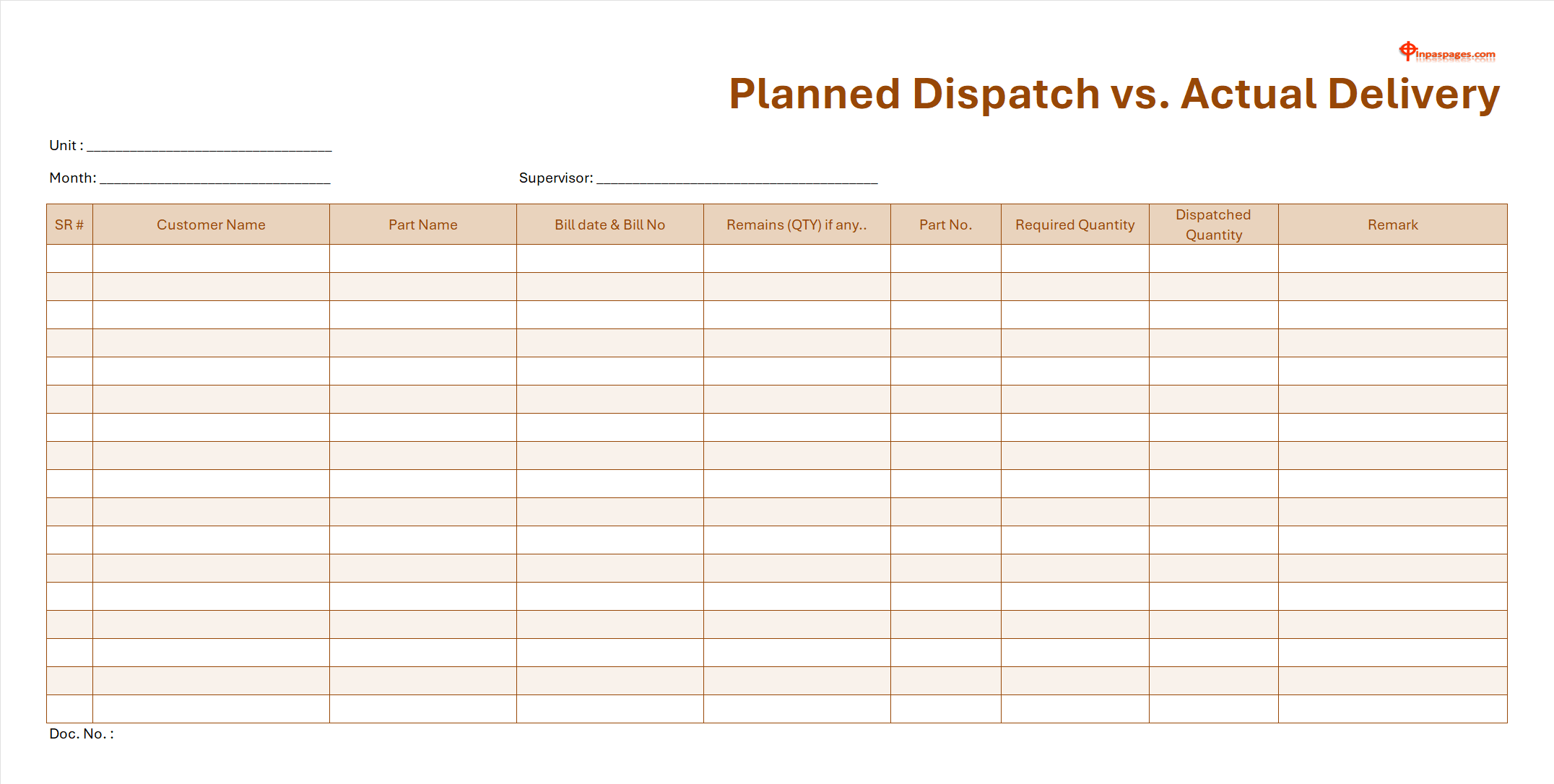
The planned dispatch vs actual delivery format provides us information about the delivery maintain during the month. Customer wise, part wise or quantity which is still remains for dispatch may help to management to get the idea how much dispatch is still pending for next month.
The overall analysis of using this format is helpful to management. They can easily identify the records of parts or customer orders. Generally, this is common practice that each business is using for their dispatch data.
Benefits of this analysis
Format that management will going to use is actually operational management tool that may provide clear visibility about the existing situation. The management can identify the efficiency of operations, production lines, or which part of the entire process has weaknesses.
Performance tracking
Review and comparing the data, management can easily track the records to measuring performance at the daily, weekly or even monthly levels information. They can easily identify what the reasons, when the customer order is in hold at which place. and who is accountable for particular product or customer order.
Operational issues
The biggest benefit of this format is, management can track the records and identify the real reason behind the delay or pending customer orders. Before too much delay, they can return the customer order in the bucket. In simple language, management early identify of operational issues, figure out immediately and highlight the real reason of operational issues.
Communication Gap
Generally, when management track any order or part of the customer order. They follow the path of process sequences. The process flow describes the current order status. Hence, management easily identify the communication gap during the processing the order. Tracking the metrics, schedules and resources makes the more synthesizable condition.
Reliability
The management responsible for communication, and timely delivery to customers. Hence, they can better respond to customer for their orders. They can clarify the exact reasons behind the delay or pending customer’s orders. It is much important to maintaining reliability of the customers for delivery schedules.