PDCA Cycle Model with Examples in PDF
The PDCA cycle model is a practical framework and a well-known method for process management, problem-solving, and continuous improvement.
What is PDCA? & Model
PDCA stand for Plan-Do-Check-Act or also refer as Plan-Do-Study- Act is cycle. This method is used in business concept are also merged with various methods, systems that help to processes & its establishment, maintained, monitoring & controlling with business methodology for continuous & continual improvement.
PDCA now days being a basic concept, when you are going to establishment any process! The cycle must help to step out process, documentation for the process also step out as per PDCA, almost every process, system can be adopt this method to flow situation as systematically.
It can also merge with Lean manufacturing concert hat basically new concept for small scale industries.
In The PDCA basic steps Plan (Planning), Do (Execution), Check (Inspection), Act (Apply the scandalize cycle). Let’s see the all steps with descriptions to know in deep:
Plan
Establish the goal and identify requirements to achieve the goal, a collection required data to structures processes, collection for required all the elements for objectives, objectives can be problems if you are establish PDCA cycle model for as problem solving tool, objectives can be operation goal to achieve you establish as objectives.
Planning for all the possible cause that become part of the planning thought structures organize is planning. Primary shape of the process flow are develop in planning
Do
Execution of the planned structure Do is second model part of the PDCA cycle, Execution Processes, Real designing of planned data are taking a real shape in this section.
Process flow is in actions, modifications, primary identification of defects of the process are important decision are possible cause impact on various part can be realized when we go in DO part of PDCA Cycle.
Check
Check also refer as Study are same requirements, objectives are met that word is different only, in check the study the result of the previous part we done in DO that all the data need to gather and inspecting, identifying, visual or by analytical mode finds are possible in the section are systematically realizing.
Result of the production parts are need to match with expected from result as planned. Study on factors for find out variation & deviation by real data collection from production line. Whether checking is complete & points are passing to next level for act.
Act
Implementation of the passed information, points that checked & verified in previous sections. Act is for standardization, obviously that meaning on do routine all activities and programs are passing thought previous cycles. If still any defects are identify in the process.
That finds a root cause, analysis, impacts & implementation, act again is standard path to run cycle successfully.
PDCA is focus on continual improvement, whole cycle is repeating & implementing on each stage, on all stages process & information are refining & go ahead for further actions.
What is PDCA Cycle Model?
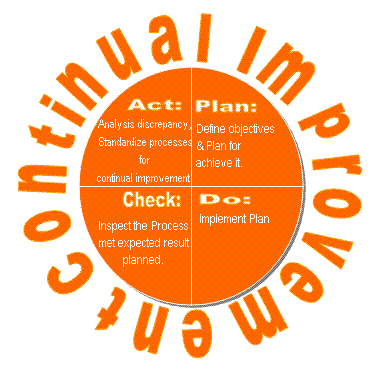
This model operates as a cyclical system; a successful change does not halt the improvement process—instead, the entire process is monitored, and new opportunities for improvement are sought. In essence, it teaches the concept of “controlled improvement.” This can be visualized in the diagram below:
Highlight
- This is not a one-time process; the conclusion of one cycle marks the beginning of another.
- It facilitates learning from results, testing ideas, and driving continuous improvement.
- It provides a practical framework for making decisions based on data and evidence.
- Before making major decisions, any production entity can avoid significant risks by first conducting small-scale experiments.
Why is this important?
The PDCA cycle model is useful because complete success is rarely achieved through a single cycle of processes; therefore, the cycle must be repeated to fully realize the desired outcomes.
- Structured problem-solving: It initiates the process of identifying problems.
- Continuous improvement: Emphasis is placed on improvement driven by the cycle rather than on decisions based on isolated processes.
- Risk reduction: Implementing changes on a small scale helps minimize the consequences of failure.
- Employee involvement: This allows employees to directly understand the process and contribute practical ideas for improvement.
- Standardization: Following success, all improvements are incorporated into Standard Operating Procedures (SOPs).
Moral:
Planning: Define objectives & Plan for achieve it.
Do: Implement Plan
Check: Inspect the Process met expected result planned.
Act: Analysis discrepancy, Standardize processes for continual improvement.