Value Steam Mapping (VSM) – Lean Manufacturing Technique
Value Stream Mapping (VSM) is a tool of the Lean philosophy. It is used to visualize, analyze, and improve the flow of information.
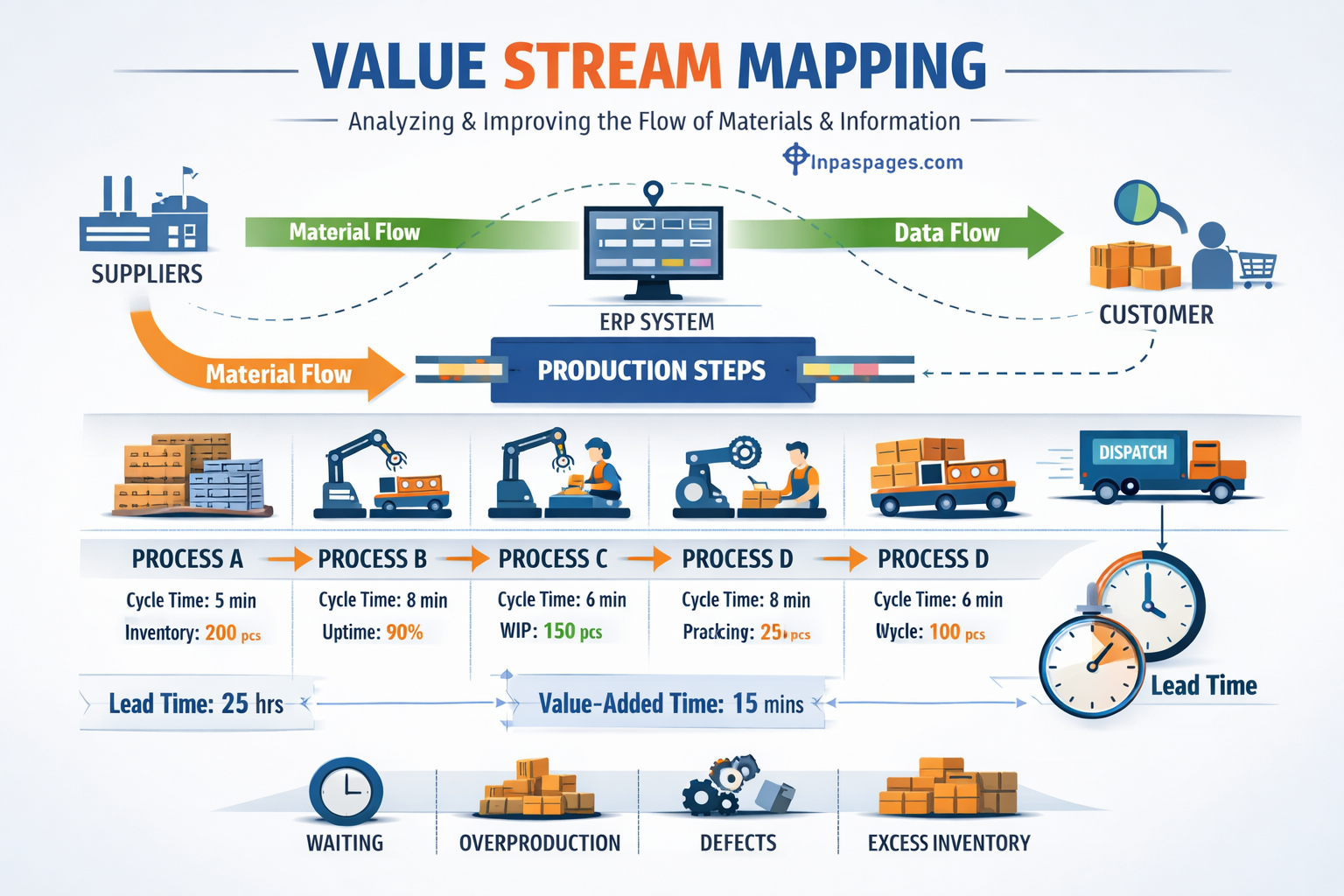
Lean manufacturing technique-value steam mapping is a technique use to design and analyze the flow of materials and information required until a product is complete and ready for sale to a final consumer.
It first originated from the manufacturers of TOYOTA and has been adopted widely. It has proved to be a success in manufacturing environments but has also been use.
Benefits of Value Stream Mapping
In other processes like supply chain, logistics, service-related industries and even healthcare.
This technique has been successful because it helps streamline work processes to ensure efficiency in production thereby identifying wastes and minimizing them thus creating value in a product.
Total product quality, zero defects, productivity improvement and management, effective management techniques and continuous improvement of processes and quality assurance are important part of the improvement of processes.
Understanding Different Types of Waste Beyond Material Loss
When you think of wastes the first thing that comes to your mind is material wastes, but that is not the only thing that lean manufacturing will save you from.
There are other wastes in form of time take to complete a process; number of employees use in the process and number of machine functions used wastes.
If wastes are minimize effectively then we would be able to have a seamless process that would be able to produce a final product that would not only please the owners but also the final consumer.
Thus creating value which is the core importance of any competitive enterprise.
Importance of Process Integration in Lean Manufacturing
A major importance this technique provides is integration of various processes. Manufacturing evolution since centuries ago has lean towards specialization of processes which has led to fragmentation of processes.
This has not achieved the optimal standard in manufacturing processes as required in the present day.
Integration as a Driver of Flexibility and Holistic Performance
Integration is associate with flexibility, adaptability of processes to change quickly as the situation demands. This creates an environment in the manufacturing process that is immune to many adverse conditions that may arise during the process of manufacturing.
Integration achieves this by giving the whole process a balcony view or a holistic approach to the performance of the process. An example in which specialization has not been successful in improvement of processes is when employing re-engineering in a process without considering other processes involved in developing of the final product like involving employees and not involving simultaneously relevant technology.
This has led to only minimal gains that if all these other processes were involve would lead to greater improvement of processes.
Thus, only when people, methodology, machines, techniques and discipline are harmonize can superior performance is achieve which is the basis of integration and lean manufacturing.
Enhancing Simplicity, Learning, and Creativity through VSM
The other importance of Lean manufacturing technique-value steam mapping is enhancing simplicity in the whole processes.
Processes used to be very complex, with bureaucratic structures, which led to wastage. This technique strives to bring in a sense of simplifying a process because the process is repeate over a long period time in cycles thus creating a learning curve that improves production.
The technique also improves creativity since continuous assessment and improvement of the process is part of the core objective of the business process.